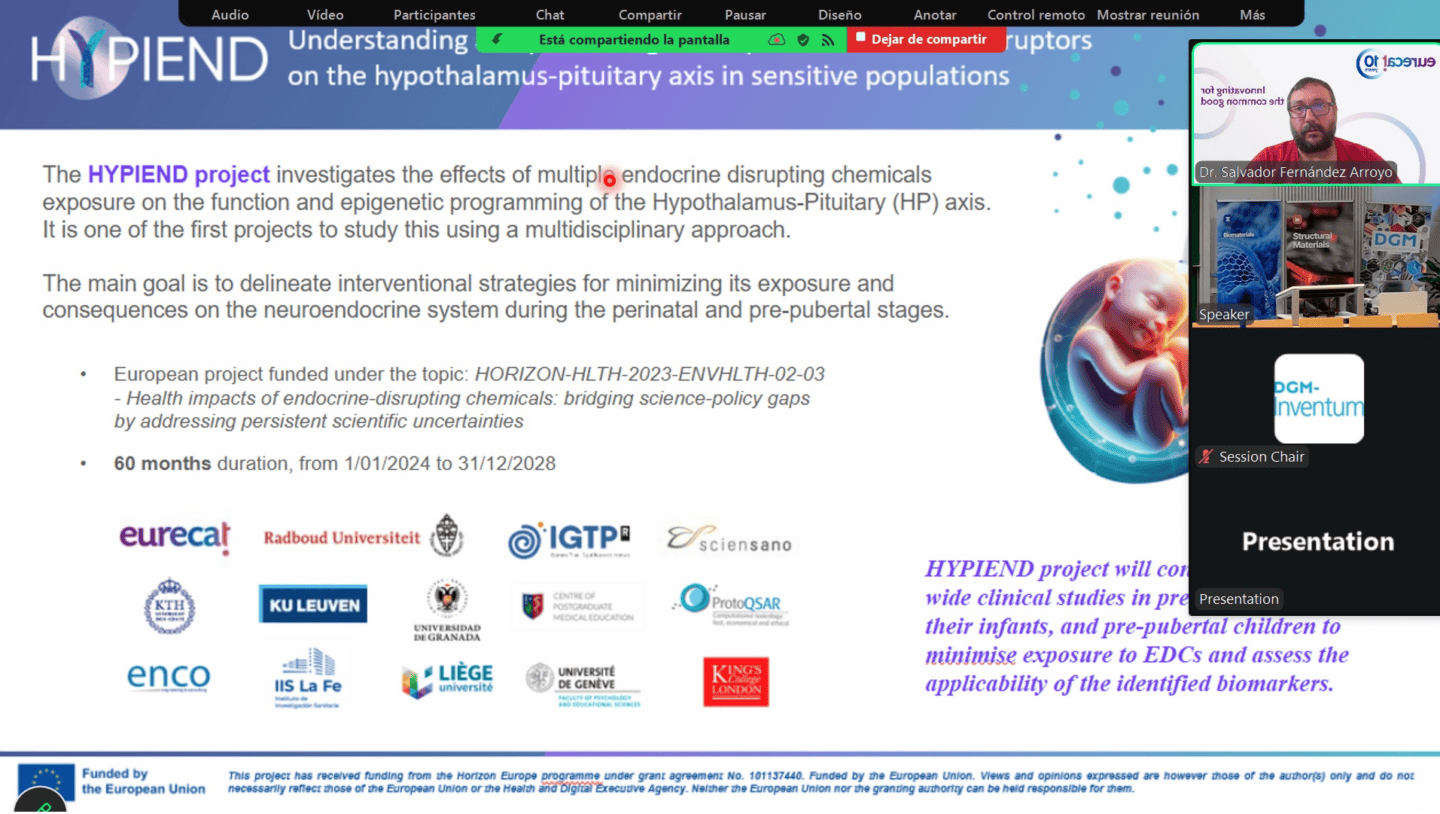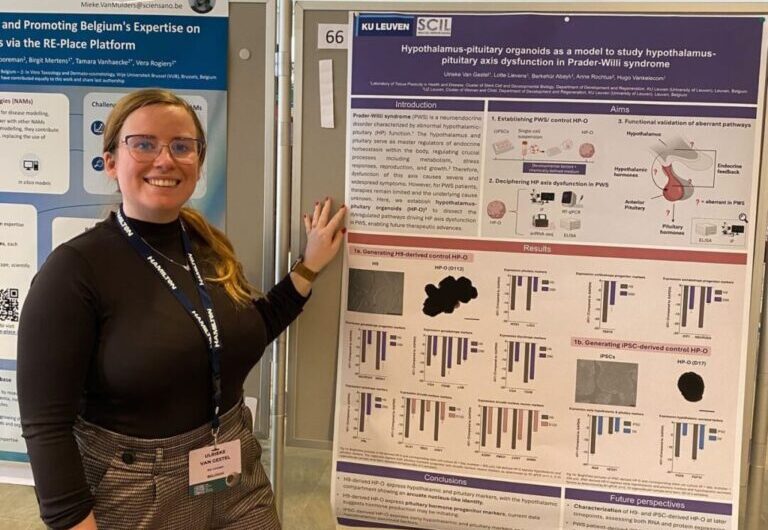
Imagine entering the world with a brain still under construction, hormones already at work, and every change in your environment leaving its mark.
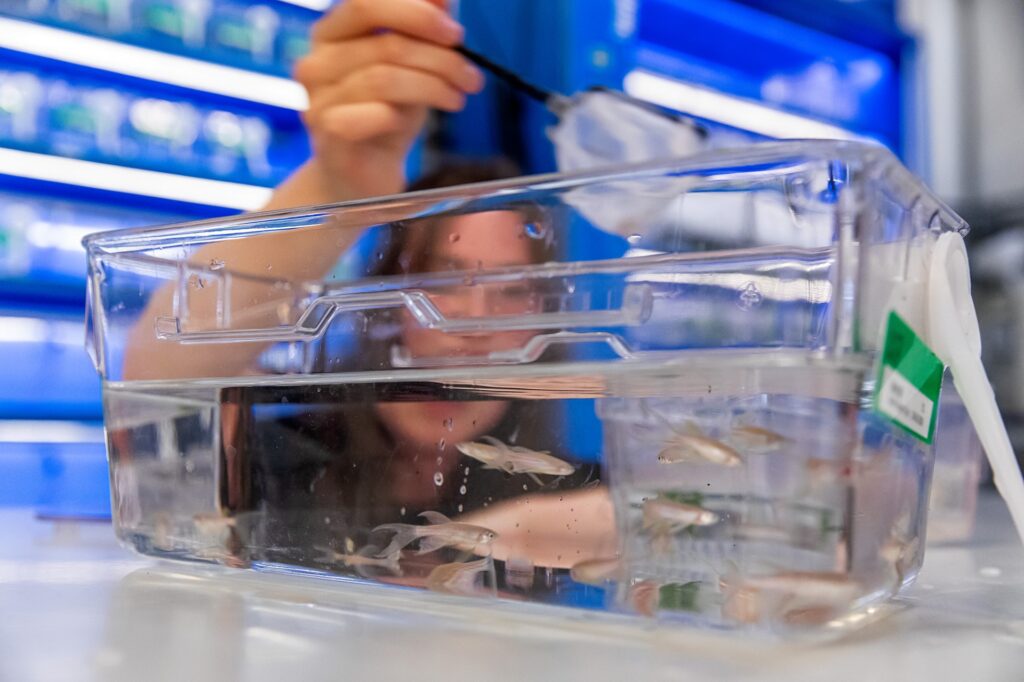
For a zebrafish larva, this is everyday life. From the moment they hatch, these tiny fish are highly sensitive to the chemicals in the water around them. Precisely, that is what makes zebrafish larvae a powerful model to study how endocrine-disrupting chemicals influence health and behaviour. Not only in fish, but in all living organisms.
Why zebrafish larvae make a powerful screening model
We are all continuously exposed to chemicals interfering with our endocrine system (so-called endocrine-disrupting chemicals, or EDCs). Some EDCs are only classified as such when they occur in a mixture. There is an increasing need for fast and reliable screening tools to identify harmful chemicals.
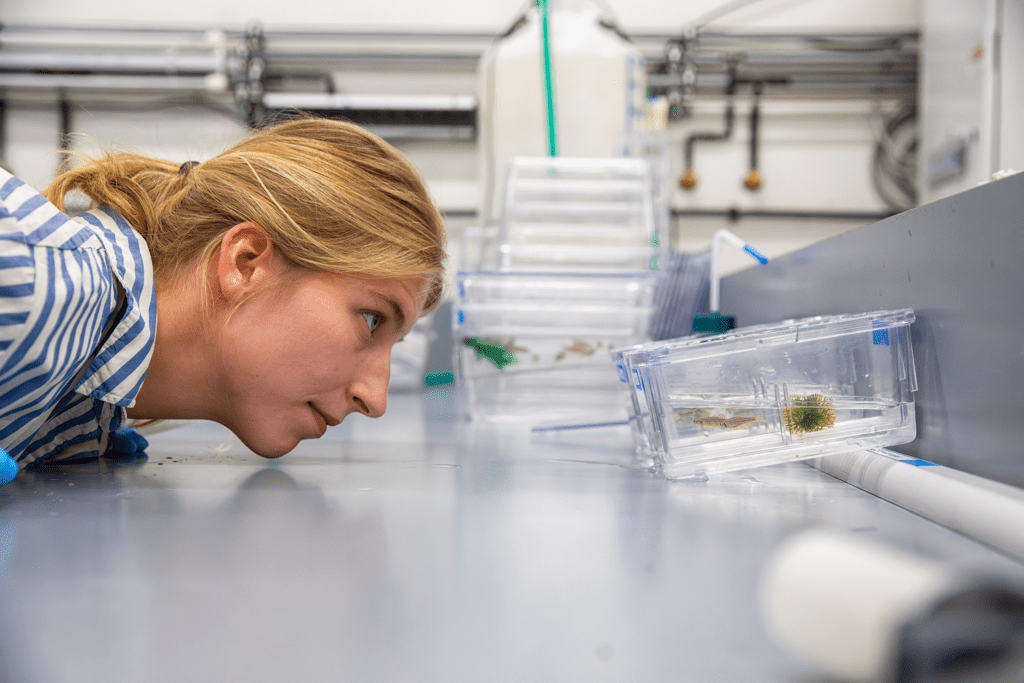
Zebrafish larvae offer a unique window into the consequences of endocrine disruption, since they share major endocrine pathways with humans, develop rapidly, and are easy to observe.
Swimming behaviour is a particular informative readout and easy to measure. In our laboratory, we study individual zebrafish larvae and monitor their swimming as shown in the video below.
We can see effects of EDCs: for instance, when larvae are exposed to a stress hormone, they show increased swimming activity, as shown in the fish swimming on the right-hand side in the video.
Tracking EDC effects through zebrafish behaviour
Since hormones determine behaviour, we use changes in zebrafish behaviour to predict how EDCs interfere with normal hormonal signalling.
Besides serving only as a simple behavioural test, zebrafish larvae also provide a biologically grounded functional model that can be used to screen chemicals and identify their specific effects as EDCs.
In our research, we tested several EDCs to which the human population is exposed to. When we exposed zebrafish larvae to individual EDCs, clear changes in behaviour were observed. These changes were not uniform: some substances reduced swimming, while others showed increased swimming or other, more subtle, altered responses to light or dark.
Based on these behavioural outcomes, compounds were grouped and selected for further testing as mixtures.
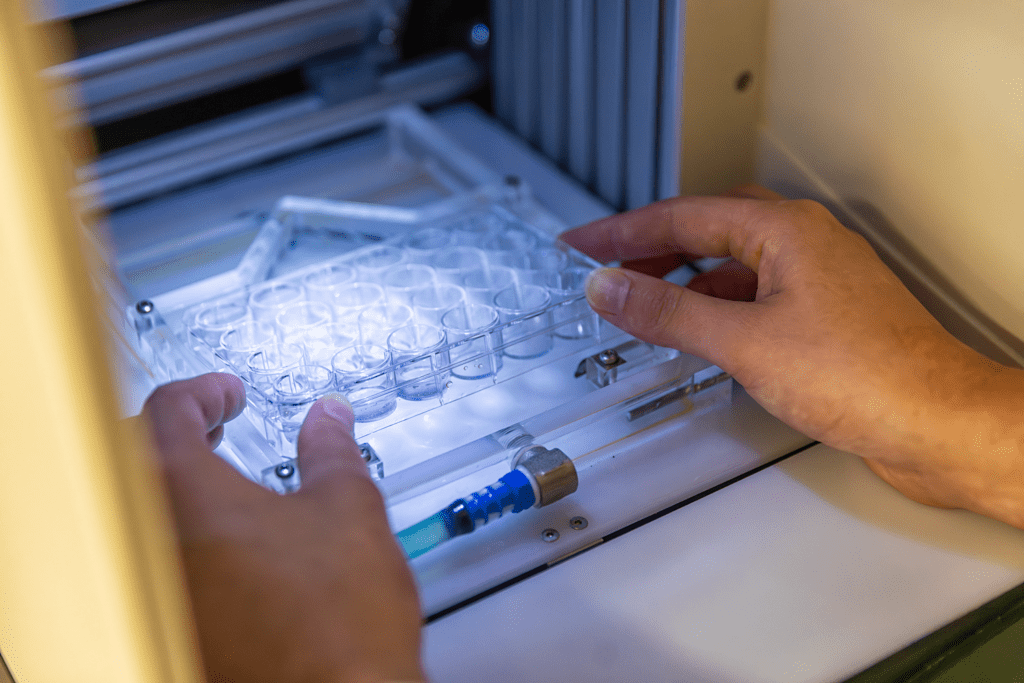
We are ALL swimming in chemicals – whether we realise it or not
These results highlight how straightforward behavioural assays in zebrafish can be used to decide what chemical mixtures warrant further investigation.
Humans are rarely exposed to a single chemical; instead, daily life involves continuous exposure to mixtures of EDCs. Testing these mixtures, therefore, better reflects real-world exposure scenarios.
In zebrafish larvae, behavioral changes following mixture exposure reveal stronger effects that may be missed when compounds are tested only individually, highlighting the zebrafish as a valuable model to study endocrine disruption in a human health context.
Authors:

Jolie Smeets
PhD Candidate, Radboud UniversityJolie Smeets holds a MSc in Biology, Radboud University. During her studies, she developed a strong interest in fish adaptation and physiology. Her research focuses on how endocrine-disrupting compounds affect hormonal systems, using zebrafish (Danio rerio) as a model organism.

Marnix Gorissen
Assistant Professor, Radboud UniversityMarnix Gorissen is an assistant professor at Radboud University, with a focus on fish adaptation physiology. He studies how environmental factors affect biology and behaviour. His research aims to generate insights that are relevant for both environmental and human health.