Endocrine disruptors are chemical compounds commonly found in everyday products that can have harmful effects on human health.
At Eurecat, researchers are developing scientific methodologies and technological tools to better understand these substances and reduce their impact on the most vulnerable populations.
Chemical substances are an integral part of modern life. They are present in the food we eat, as well as in healthcare, cleaning, and personal care products. While not all of these substances pose a risk to health, recent scientific studies have identified more than 1,000 chemical compounds as potential endocrine disruptors.
But what exactly are endocrine disruptors, and where can we find them?
Endocrine-Disrupting Chemicals (EDCs) are substances capable of interfering with the hormonal system, particularly during sensitive life stages such as fetal development and early childhood. Disruptions in hormone production and regulation can lead to a wide range of health problems, including reproductive disorders, developmental alterations, and certain types of cancer.
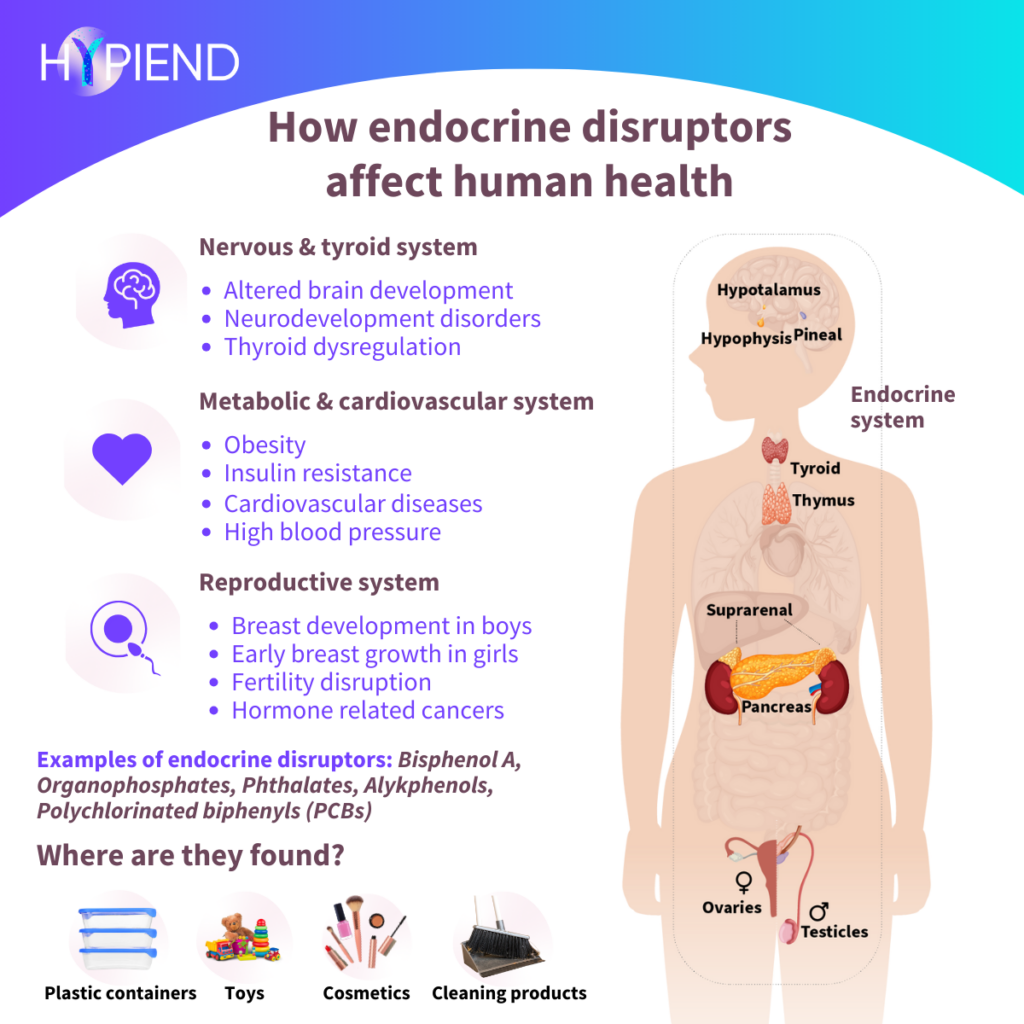
EDCs can be found in a broad range of everyday products, including plastics, cosmetics, textiles, cleaning agents, food, furniture, and electronic devices. These substances can enter the body through inhalation, ingestion, or skin contact, resulting in continuous and often unnoticed exposure.
HYPIEND: advancing knowledge for vulnerable populations
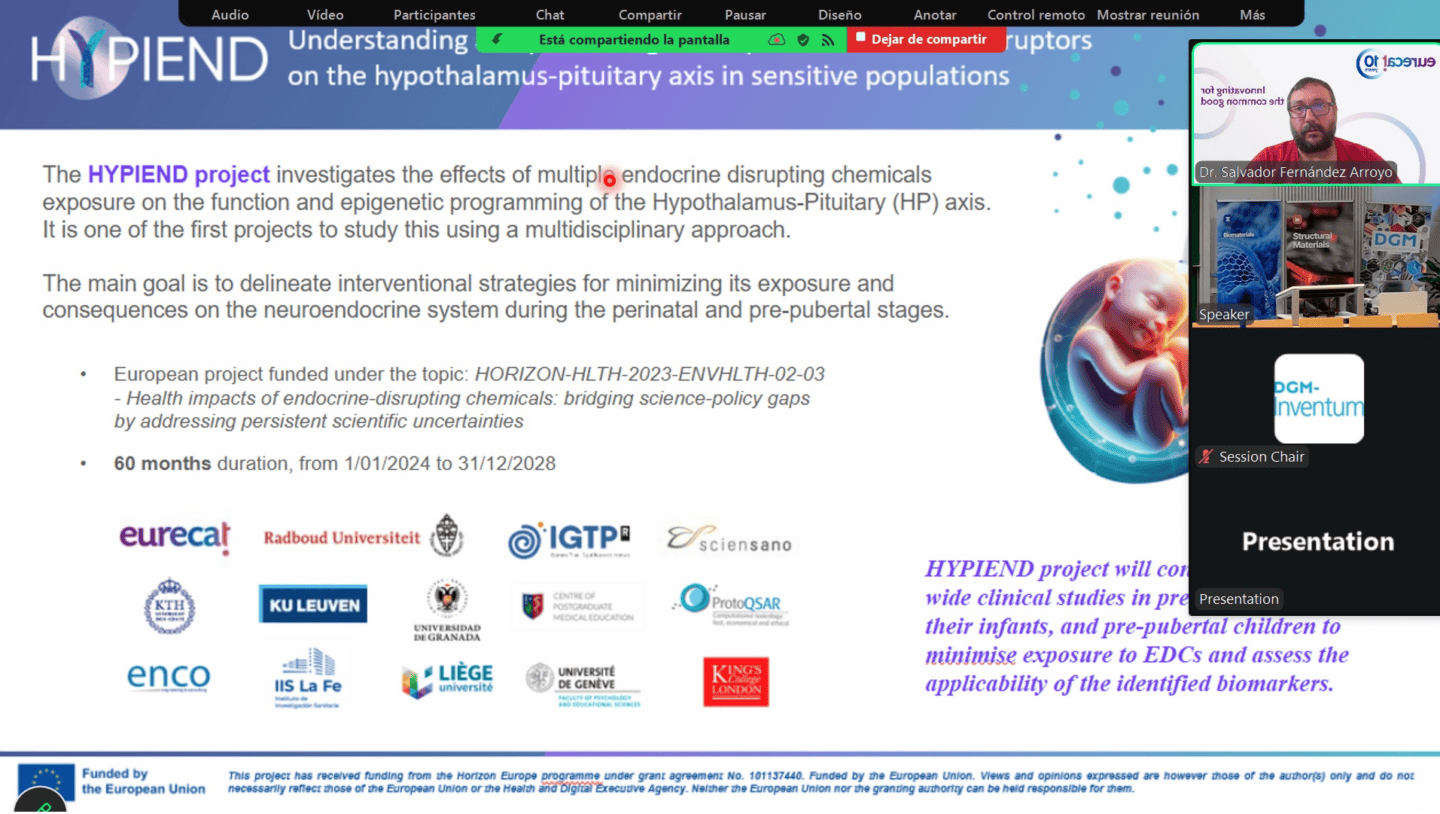
Funded by the European Union and coordinated by Eurecat, HYPIEND project is investigating how EDCs affect pregnant women, infants, and children: the populations most vulnerable to these compounds.
Using a multidisciplinary approach and advanced methodologies, the project combines computational analysis, laboratory research, and two European-scale lifestyle intervention clinical studies. This integrated strategy enables researchers to better understand exposure pathways and biological effects across different life stages.
Science and innovation to prevent EDCs impact on health
Endocrine disruptors represent a global public health challenge that requires responses grounded in scientific research and technological innovation. Understanding how these compounds affect metabolism and identifying their mechanisms of action are key steps toward effective prevention.
To assess exposure to EDCs and their biological effects, Eurecat employs highly precise techniques such as high-sensitivity mass spectrometry. In parallel, omics studies are conducted to observe how these substances alter metabolic and molecular processes.
Omics technologies allow researchers to capture the body’s response to cumulative exposure to endocrine disruptors, going beyond traditional analytical methods.

This research is supported by the cutting-edge infrastructure of the Centre for Omic Sciences (COS), a singular research facility equipped with state-of-the-art technologies in metabolomics, proteomics, transcriptomics, and genomics.
The omics data generated can be used to identify new biomarkers, improve understanding of disease mechanisms, evaluate both expected and unexpected effects of therapies, and generate new scientific hypotheses.
Towards more personalized and preventive health
One of Eurecat’s most innovative research lines focuses on the development of a digital behavior-change platform designed to help reduce exposure to endocrine disruptors. This tool incorporates a gamified system that offers personalized missions tailored to each user’s profile, providing practical and actionable lifestyle recommendations.
The HYPIEND digital platform promotes sustainable habit changes aimed at reducing exposure to endocrine disruptors. It integrates three types of content to support behaviour change:
- Motivational messages: explaining why change is necessary and enhancing engagement
- Missions: which are concrete tasks showing how to implement changes in daily life
- Reinforcement messages: designed to help maintain these habits over the long term.
Research on endocrine disruptors within HYPIEND project reflects Eurecat’s commitment to improving quality of life and public health through innovative technological solutions that promote prevention and healthy lifestyles.

By adopting a multidisciplinary perspective that combines biotechnology, data science, omics analysis, and digital tool design, Eurecat drives projects that deliver both scientific knowledge and practical tools to reduce exposure to harmful compounds and anticipate their effects.
With this approach, innovation becomes a key enabler in the transition toward more personalized, preventive, and sustainable healthcare.
Author:

Noemí Boqué
HYPIEND Technical Coordinator, Researcher at the Nutrition and Health Unit at EurecatNoemí Boqué holds a BSc in Human Nutrition and Dietetics, an MSc in Nutrition and Metabolism, and an MSc in Public Health, and completed her PhD at the University of Navarra, including an international research stay at Laval University (Canada). Her research focuses on personalized and precision nutrition, with experience in several European projects. She has co-authored over 40 peer-reviewed scientific publications, five book chapters and one patent, and has contributed as a nutrition expert to the development of digital health applications promoting healthy dietary and lifestyle habits.