The European HYPIEND project participated in the international symposium Building Knowledge Together: Citizen Science, Communication, and Trust, held on 5–6 October 2026 at the Museum für Naturkunde in Berlin, Germany. The event brought together researchers and science communication professionals to explore the role of communication and trust in citizen science and participatory research.
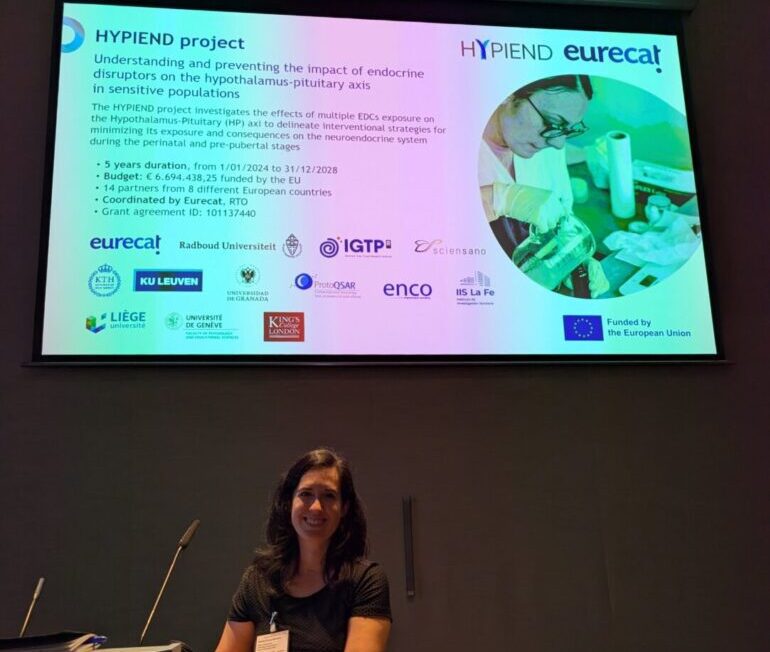
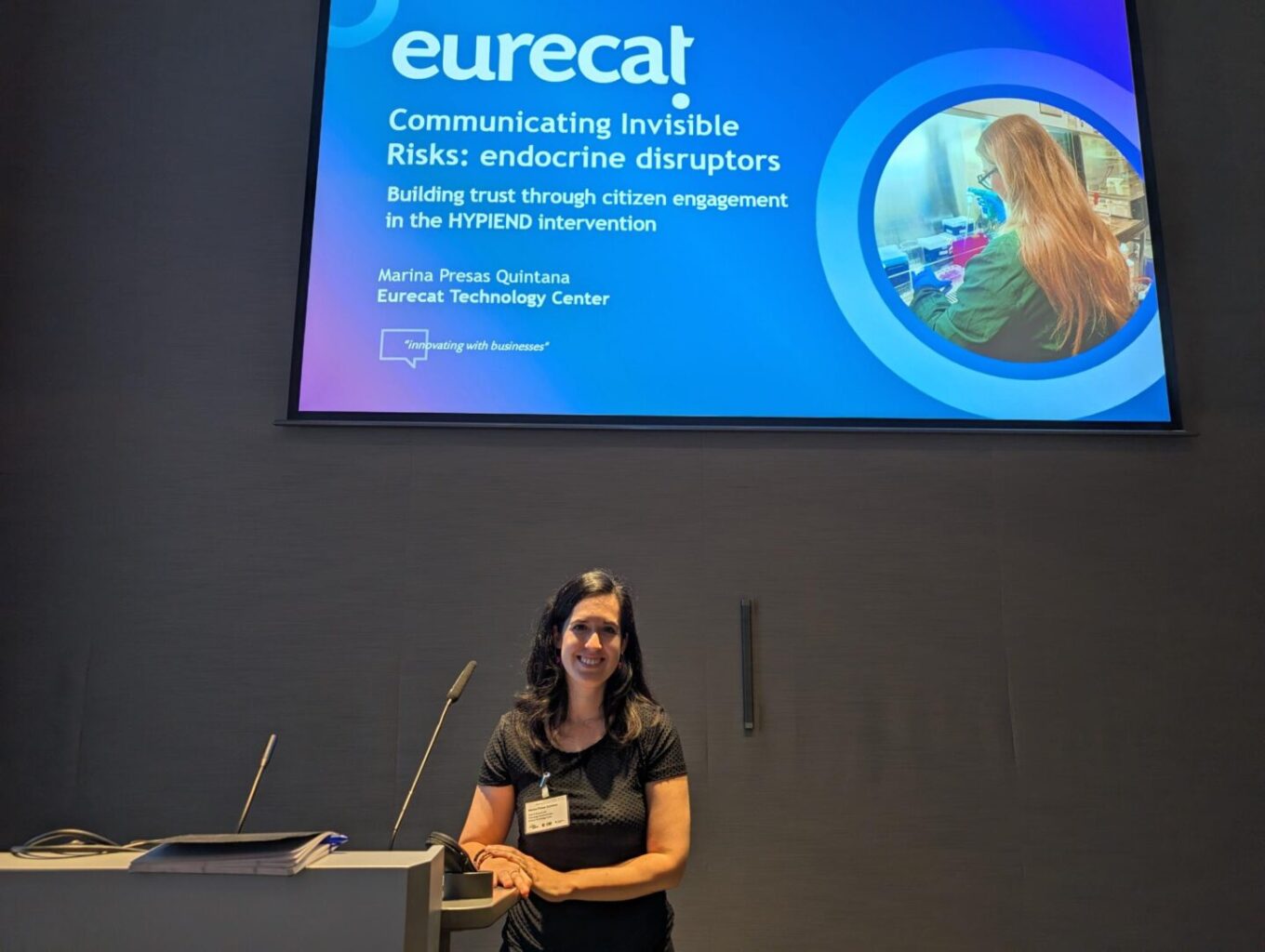
Marina Presas Quintana, Head of Scientific and Technological Communication at Eurecat, delivered the talk “Communicating Invisible Risks: Building Trust Through Citizen Engagement in the HYPIEND Intervention on Endocrine Disruptors” during the session dedicated to citizen science and health.
Her presentation explored how science communication can move beyond raising awareness to actively engaging citizens in health research, using the HYPIEND project as a practical example.
One of the key challenges addressed was how to communicate the potential health risks of endocrine-disrupting chemicals (EDCs), which can be present in everyday products and environments, without generating unnecessary fear or placing the responsibility for exposure entirely on individuals.
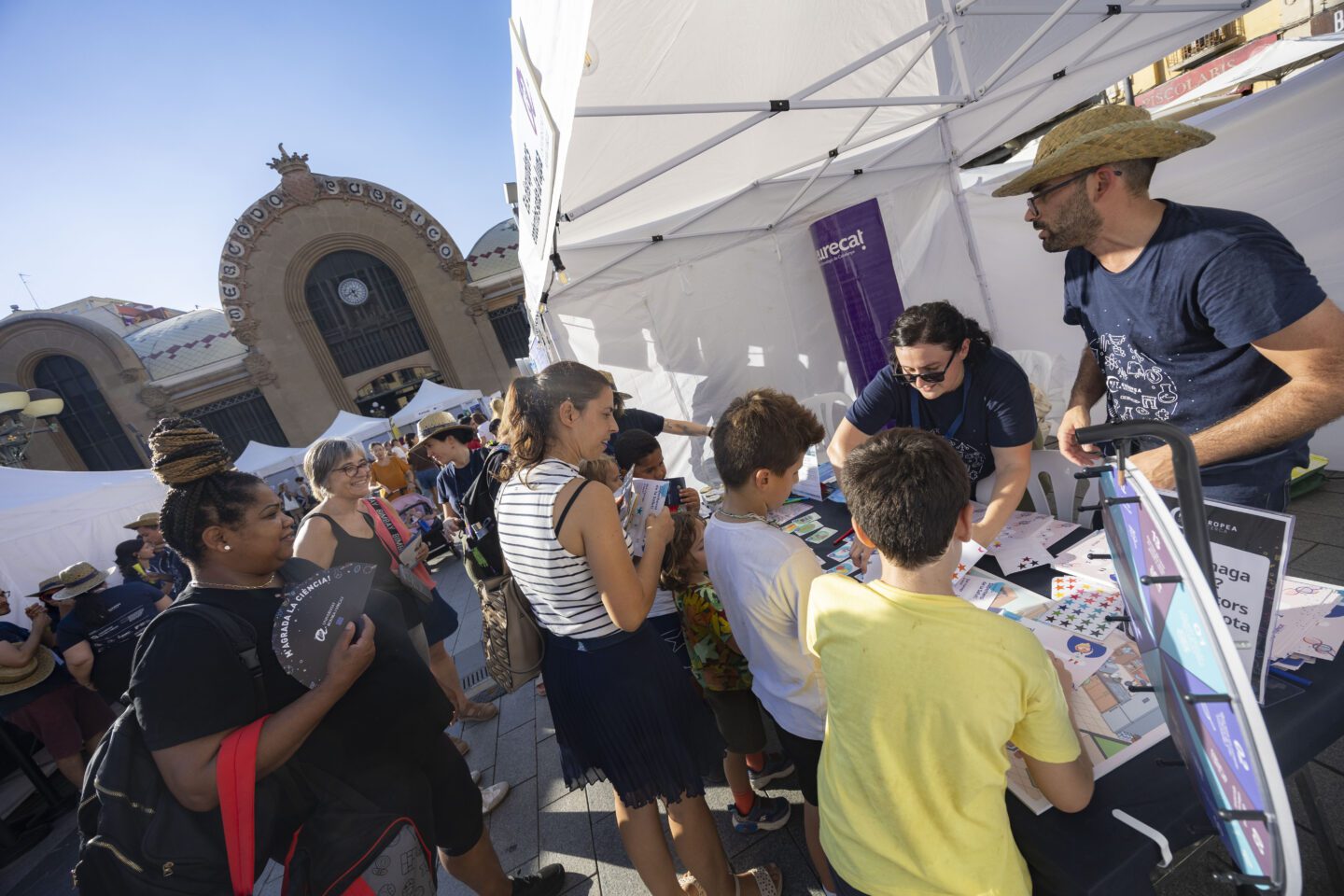
Drawing on HYPIEND’s experience, the speaker shared several communication strategies designed to build trust and encourage meaningful participation, including the use of accessible and positive messages, the involvement of trusted healthcare professionals and researchers, and interactive activities that help families explore scientific concepts through familiar situations.
The presentation also highlighted the project’s educational campaigns in schools and its digital behaviour-change platform, developed by Eurecat, which uses motivational messages, personalised missions and reinforcement content to support healthier everyday habits.
A central message was that citizen engagement must be designed as an integral part of research, rather than treated simply as a communication activity. This means considering participants’ motivations, providing useful information and support, and ensuring that citizens understand the value of their contribution to scientific knowledge.
Organised by the Trust in Citizen Science (TiCS) initiative in collaboration with the PCST network and mit!, the symposium offered an international forum to exchange experiences and approaches to strengthening relationships between science and society.