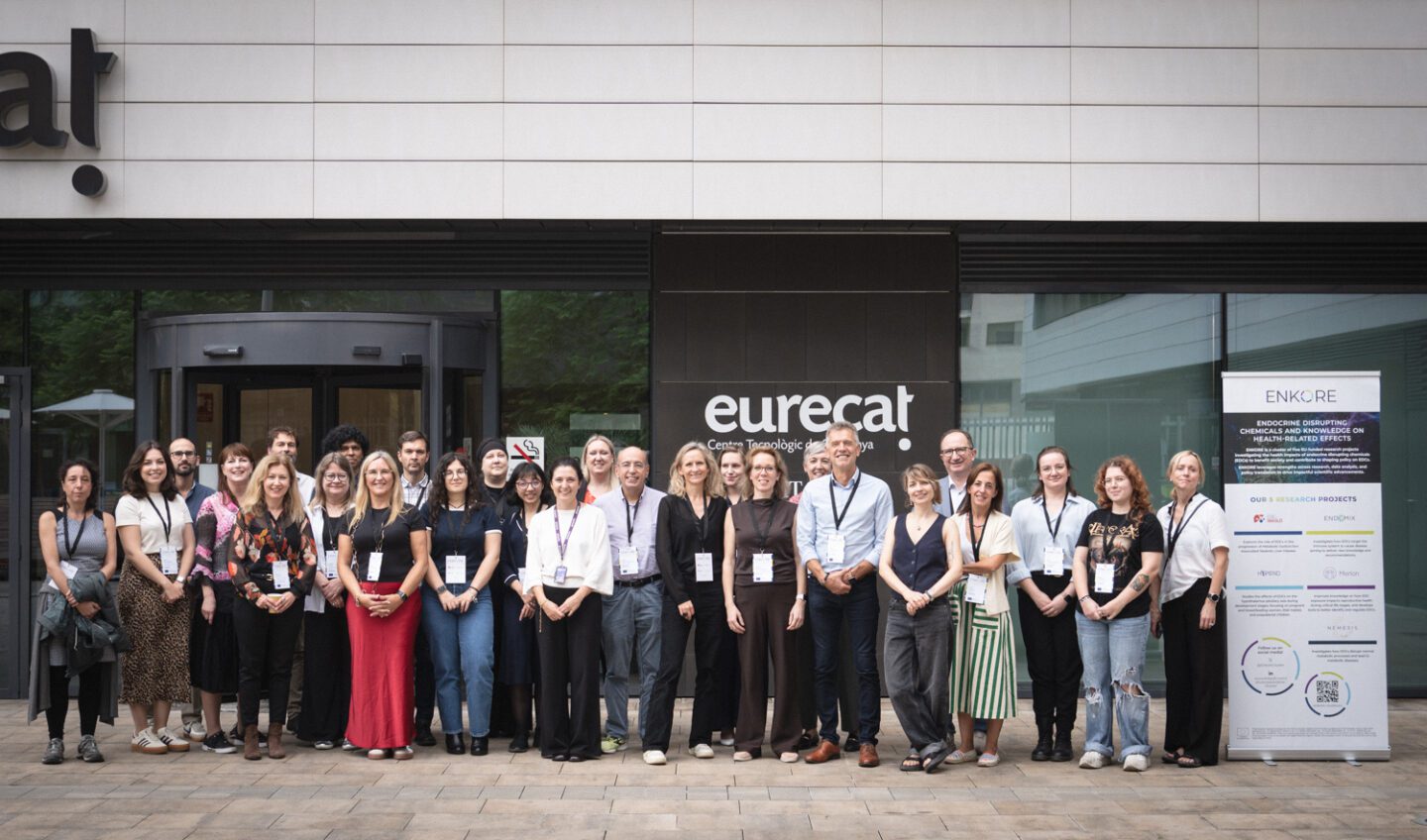
HYPIEND hosts the 2nd ENKORE Cluster Annual Meeting in Barcelona to strengthen research collaboration on endocrine disruptors
The meeting brought together researchers and experts from five European projects to advance scientific cooperation and strengthen the translation of research findings into policy and regulation.
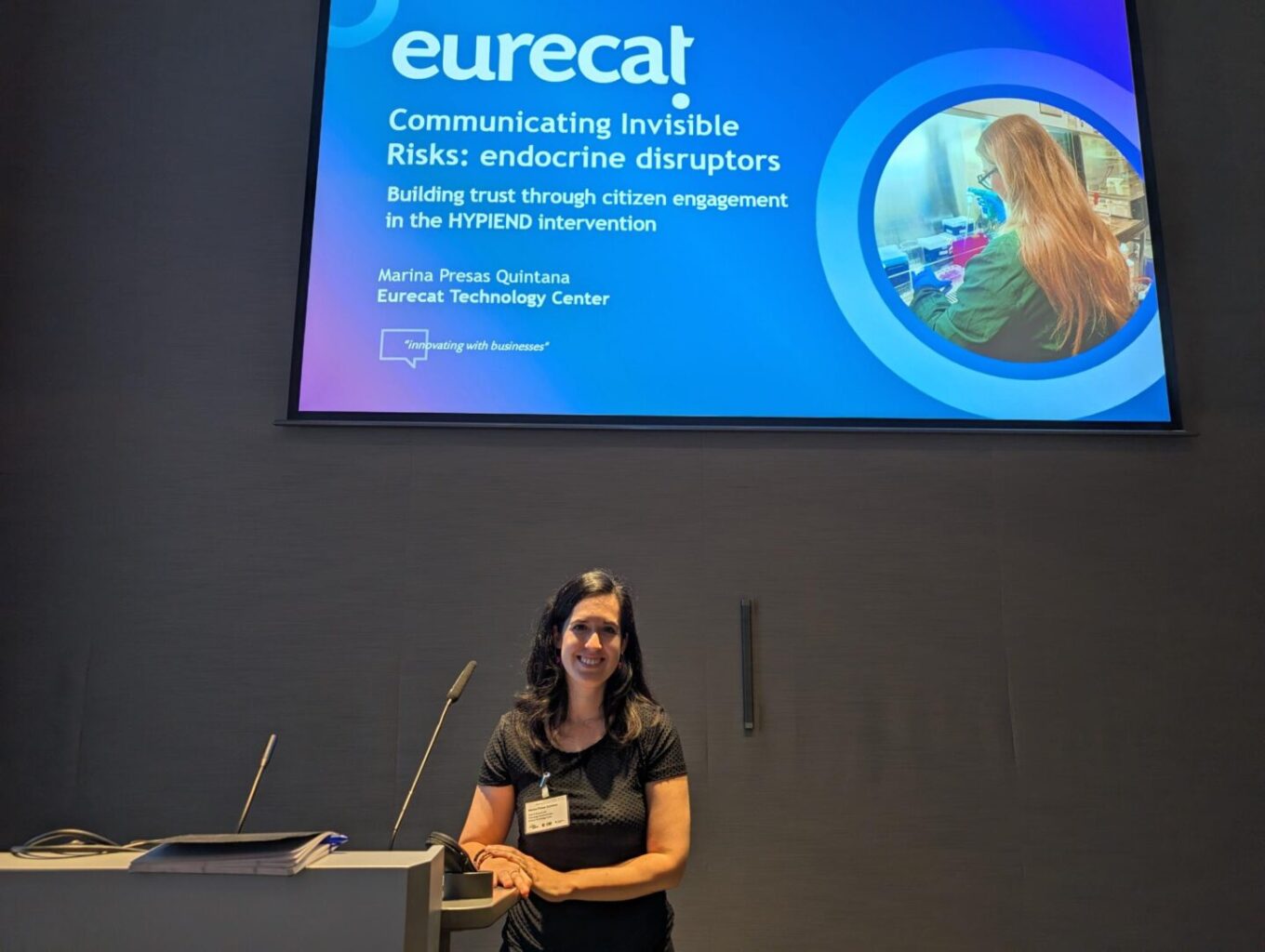
HYPIEND shares its citizen science communication approach at international symposium in Berlin
Eurecat presented lessons learned from the HYPIEND project on how science communication can build trust, encourage citizen participation and translate complex health risks into practical everyday actions.
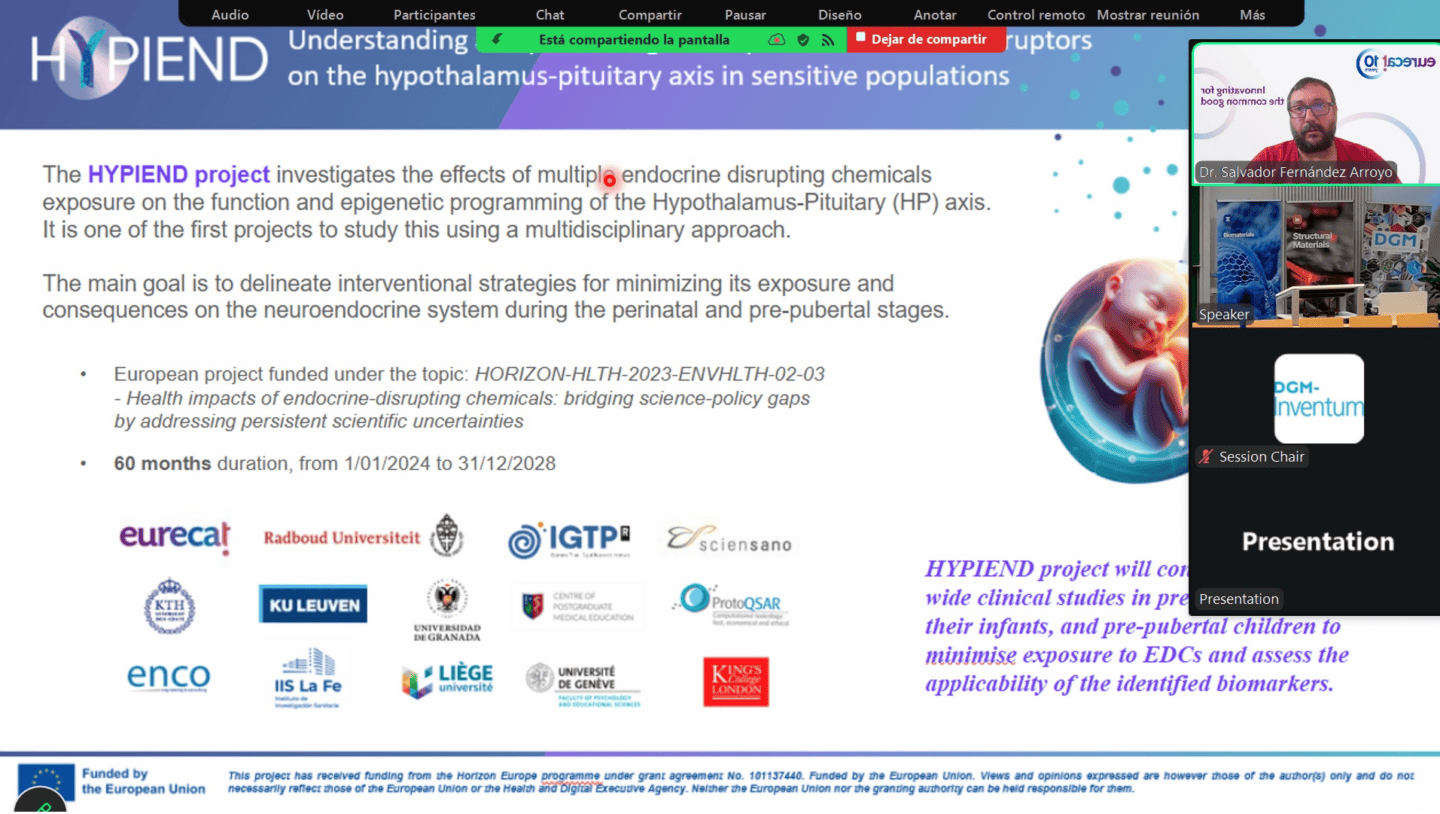
New analytical strategies to assess exposure and health risks from EDCs presented at MSE 2026
Research linked to the HYPIEND project was presented at the international MSE 2026 Congress, highlighting new approaches to better understand endocrine-disrupting chemicals and their potential effects on human health.

HYPIEND brings endocrine disruptor research closer to families at the European Researchers’ Night
Eurecat led an interactive HYPIEND outreach activity at the European Researchers’ Night in Tarragona, inviting families to become “endocrine disruptor detectives” and learn how everyday choices can help reduce exposure to endocrine-disrupting substances.
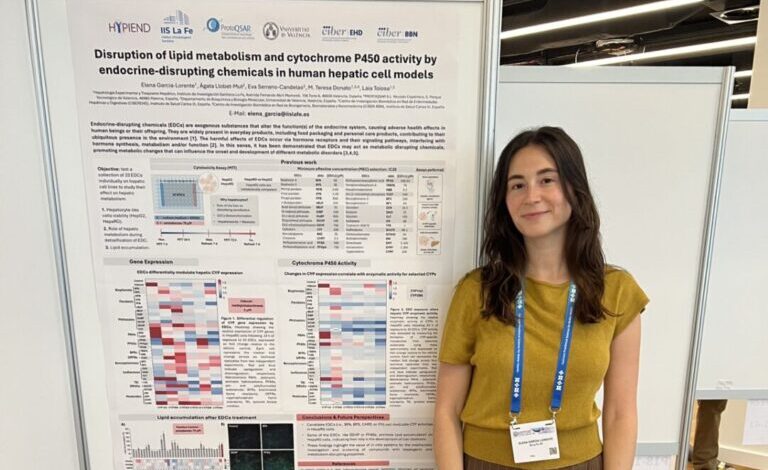
HYPIEND research on endocrine disruptors and liver metabolism presented at EUROTOX 2026
Elena Garcia-Lorente, PhD Candidate at the Experimental Hepatology and Liver Transplantation research group of the Instituto de Investigación Sanitaria La Fe (IIS La Fe), presented HYPIEND research on the effects of endocrine-disrupting chemicals on liver metabolism at EUROTOX 2026.
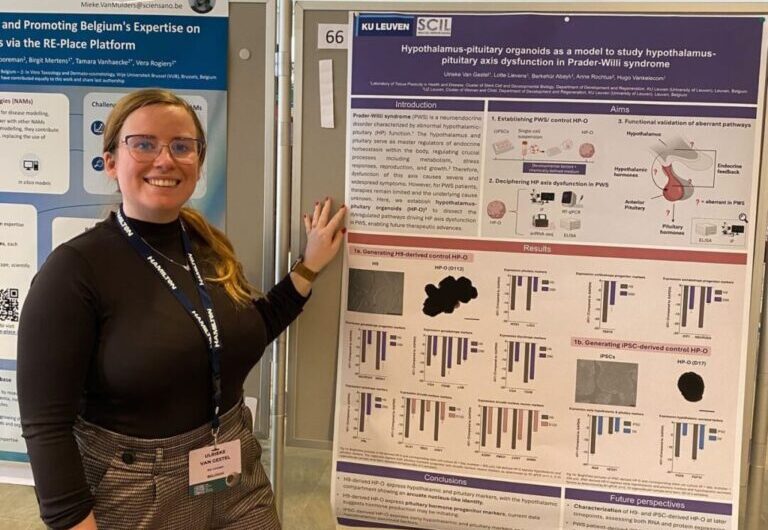
HYPIEND research on hypothalamus–pituitary organoids presented at organoid@KUL 2026
HYPIEND researcher Ulrieke Van Gestel presented progress in the development of hypothalamus–pituitary organoids at the organoid@KUL 2026 Symposium, held on 14–15 September in Leuven, Belgium.
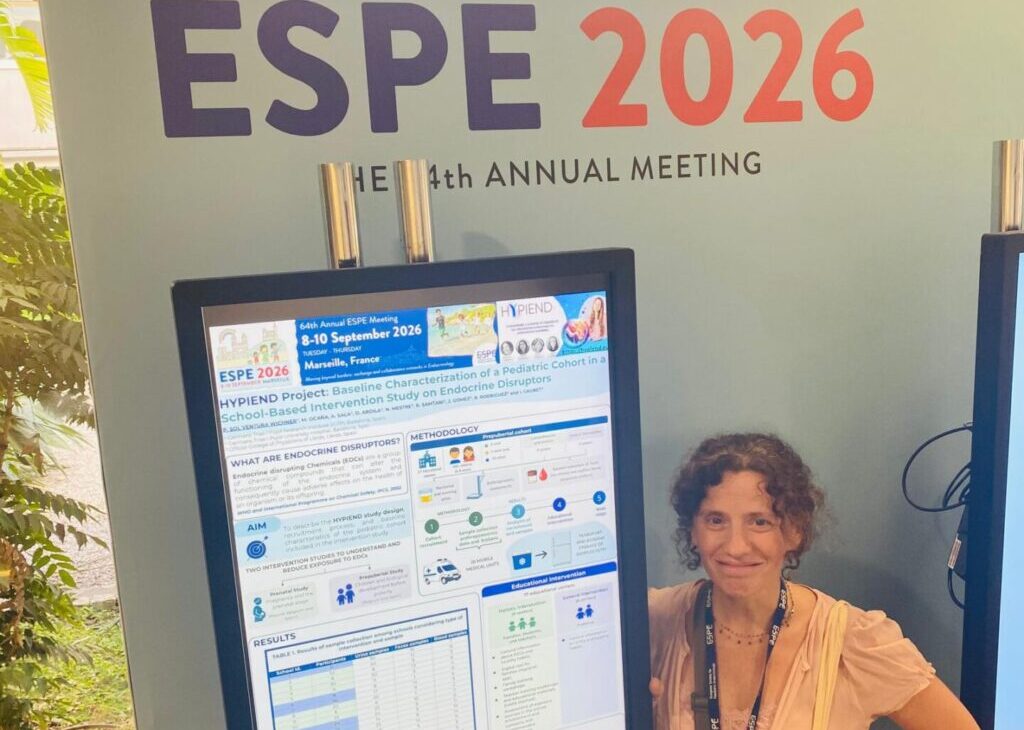
HYPIEND prepubertal study presented at ESPE 2026 in Marseille
Dr Paula Sol Ventura, leader of the prepubertal study in Spain from IGTP presented the baseline characterisation of HYPIEND’s paediatric cohort and its school-based intervention designed to reduce children’s exposure to endocrine-disrupting chemicals.
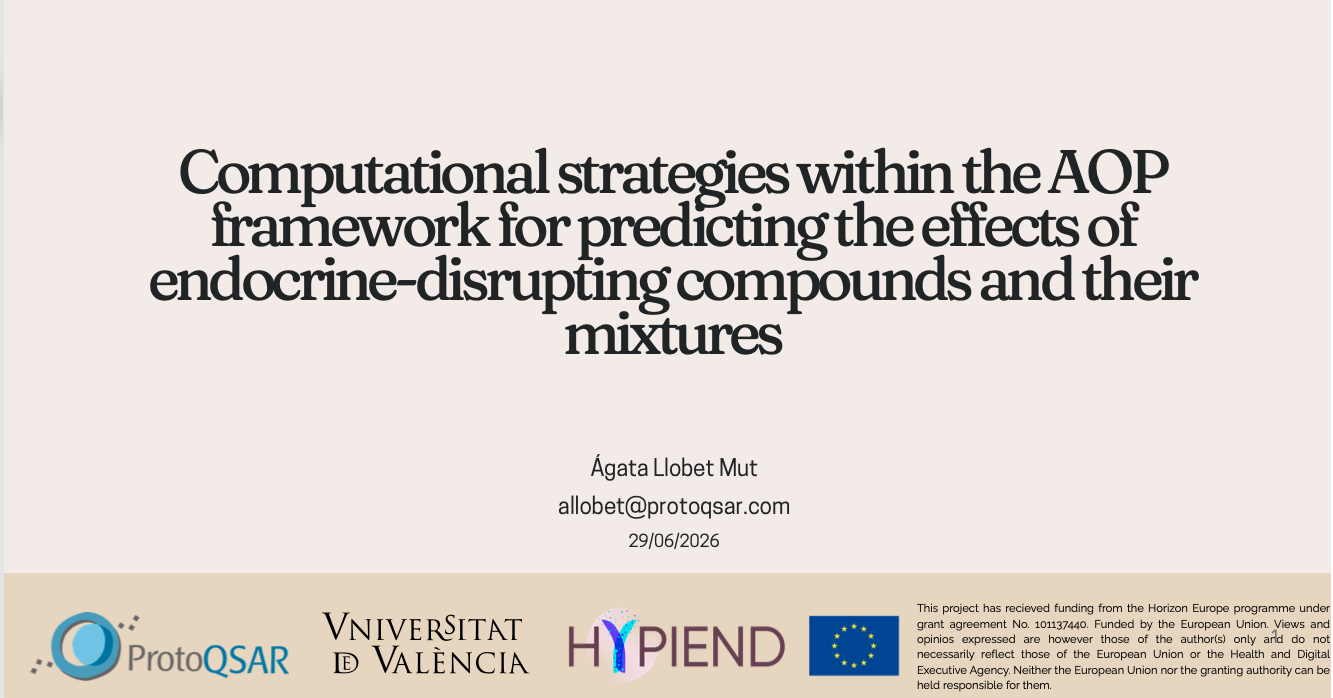
HYPIEND computational strategies for assessing endocrine disruptors presented at ESPA Workshop
ProtoQSAR PhD Candidate Ágata Llobet-Mut presented HYPIEND research on computational approaches to predict the effects of endocrine-disrupting chemicals and their mixtures at a scientific workshop in Salamanca.
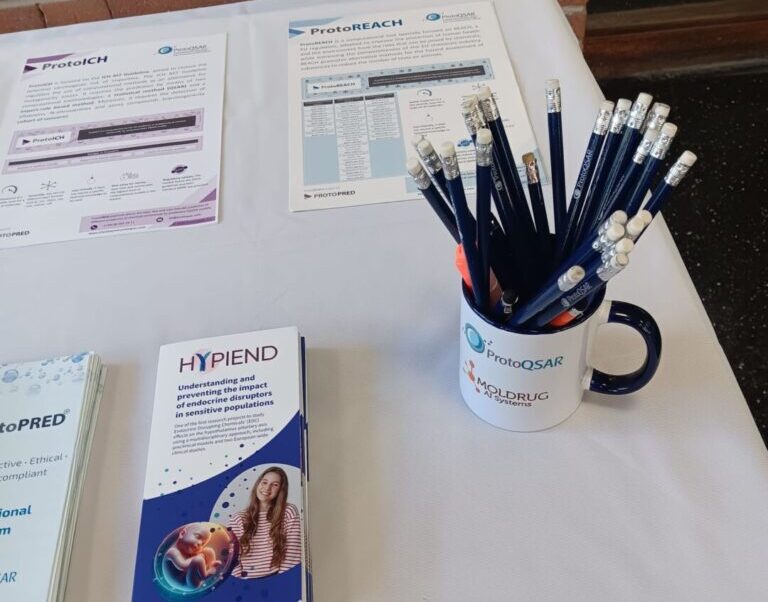
HYPIEND showcased at the AETOX 2026 Congress of Toxicology
HYPIEND information and dissemination materials were shared with the toxicology community during AETOX 2026 in Madrid through project partner ProtoQSAR.
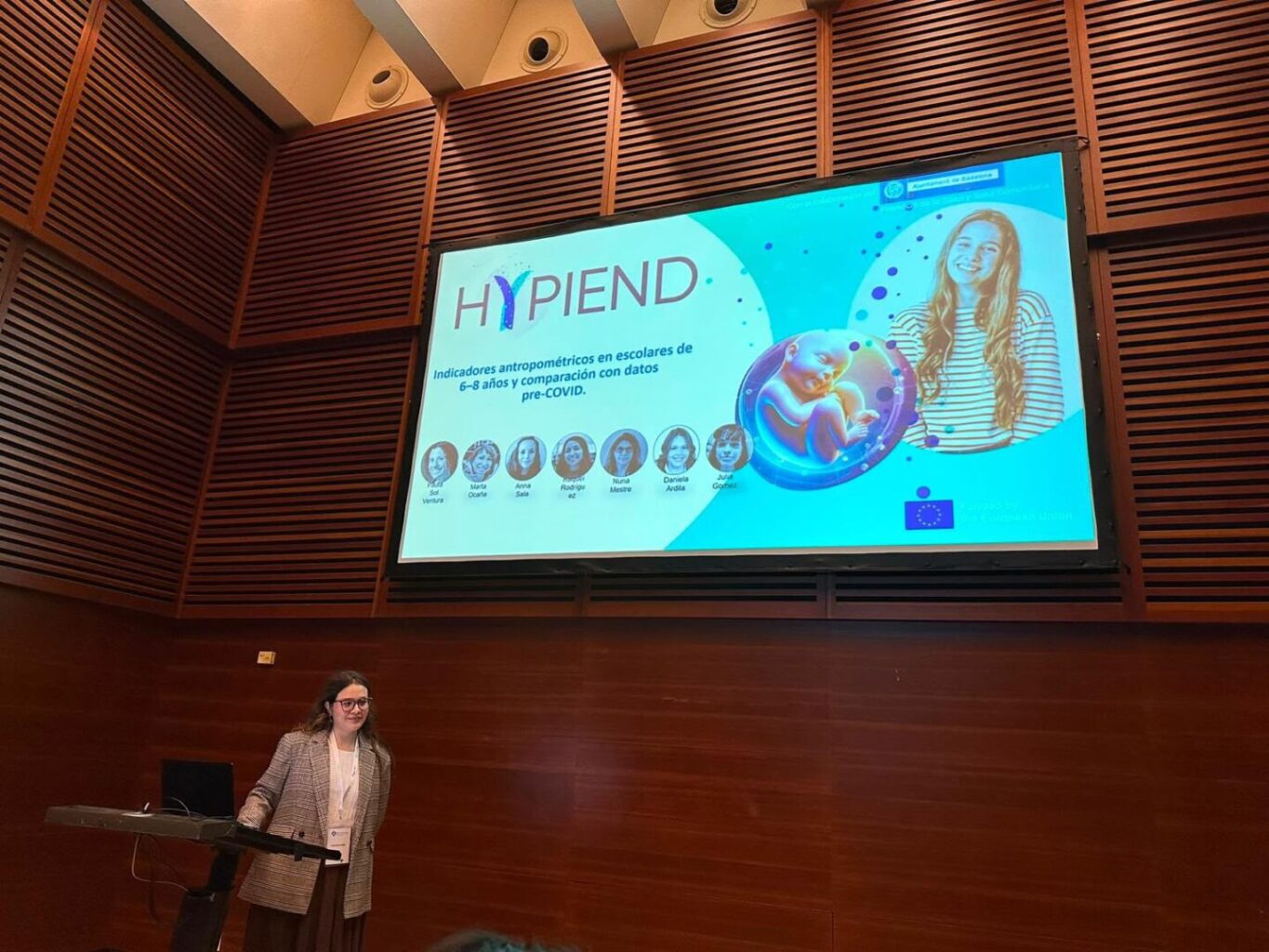
HYPIEND presents two oral communications at the Spanish Association of Paediatrics Congress
IGTP researcher Daniela Ardila presented HYPIEND research on school-based strategies to reduce children’s exposure to endocrine-disrupting chemicals and on anthropometric indicators in children aged 6–8.