HYPIEND was represented at the 48th Congress of the Spanish Foundation of Paediatric Endocrinology Society (FSEEP), taking place in Barcelona from 27 to 29 May 2026, with the presentation of two scientific posters led by Dr Paula Sol Ventura, researcher at IGTP.
The contributions highlight the project’s work to better understand the impact of endocrine-disrupting chemicals on children’s health, with a particular focus on the hypothalamic-pituitary axis and sensitive developmental stages.
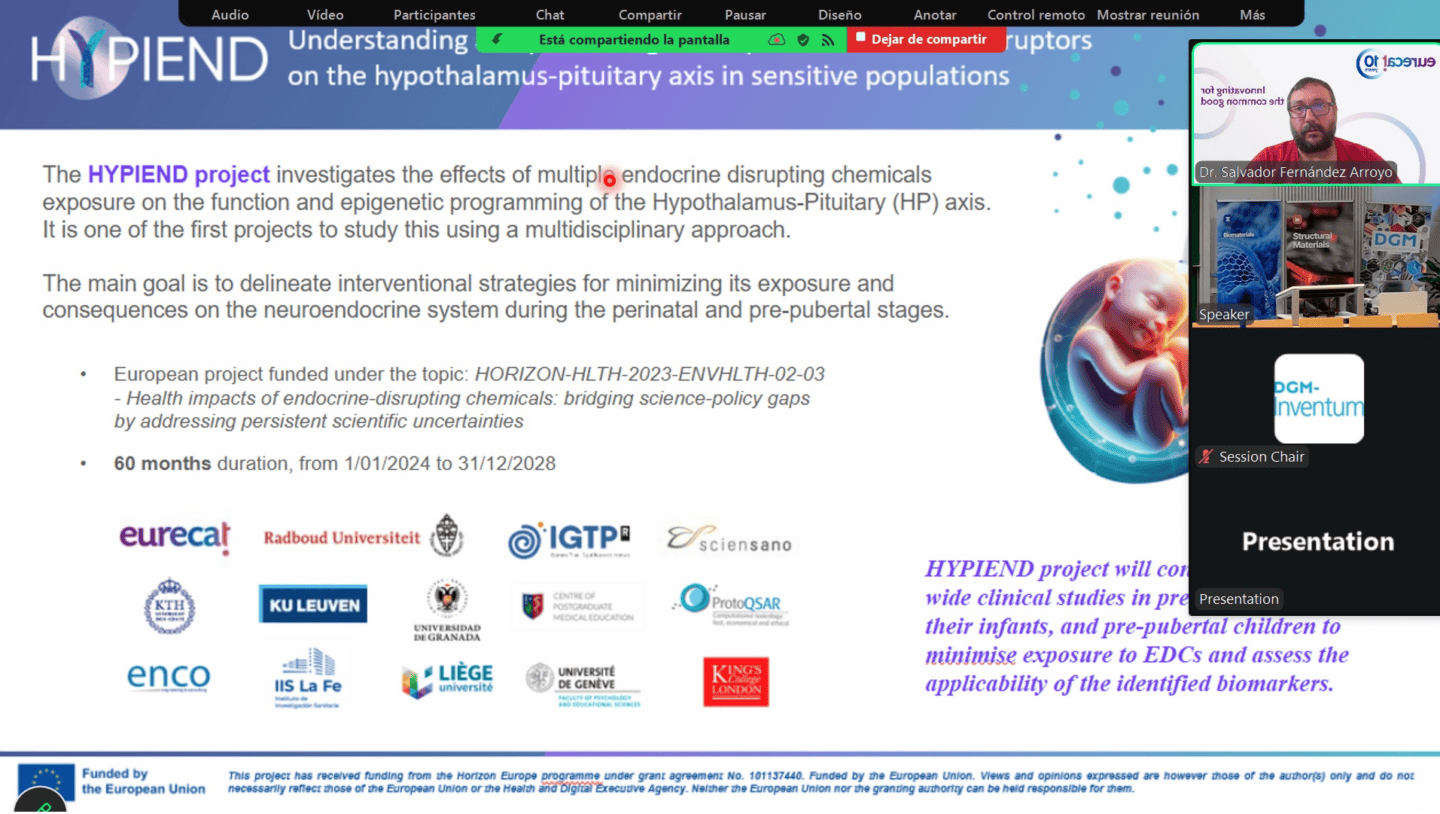
HYPIEND project studies how exposure to multiple endocrine-disrupting chemicals may affect endocrine function and epigenetic programming, while also exploring prevention and intervention strategies for vulnerable populations.
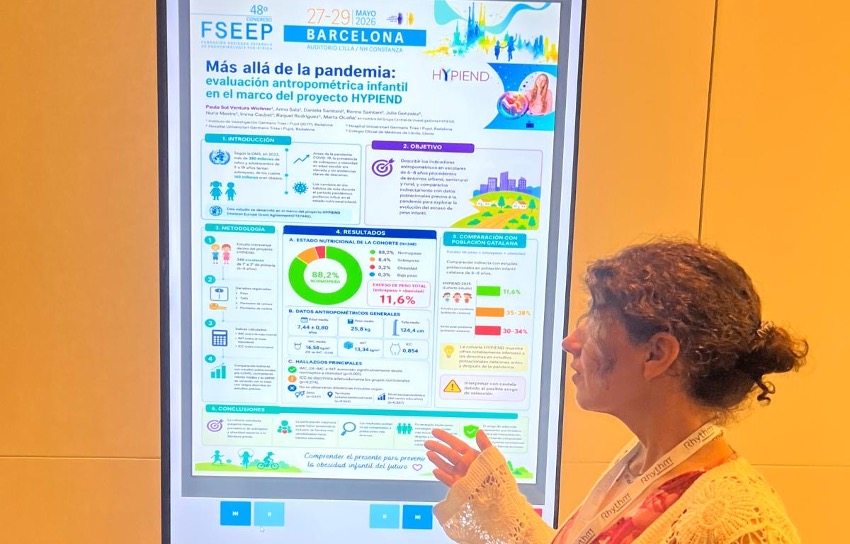
The first poster, “Beyond the pandemic: Spanish children’s anthropometric assessment within the HYPIEND project”, presents work on the evaluation of Spanish children’s anthropometric indicators in the context of HYPIEND. This contribution is part of the project’s broader effort to generate evidence on factors influencing child development and endocrine health.
The second poster, “HYPIEND project: baseline characterisation of a Spanish child cohort in a school-based intervention study on endocrine disruptors”, focuses on the initial characterisation of a paediatric cohort involved in a school intervention study. This research is designed to support the development of strategies aimed at reducing exposure to endocrine disruptors in children’s everyday environments.
Together, these two presentations underline HYPIEND’s multidisciplinary approach, combining clinical research, environmental health, paediatric endocrinology and prevention.
The project aims to provide new knowledge and practical tools to minimise exposure to endocrine-disrupting chemicals and reduce their potential consequences on the neuroendocrine system during key stages of development. S