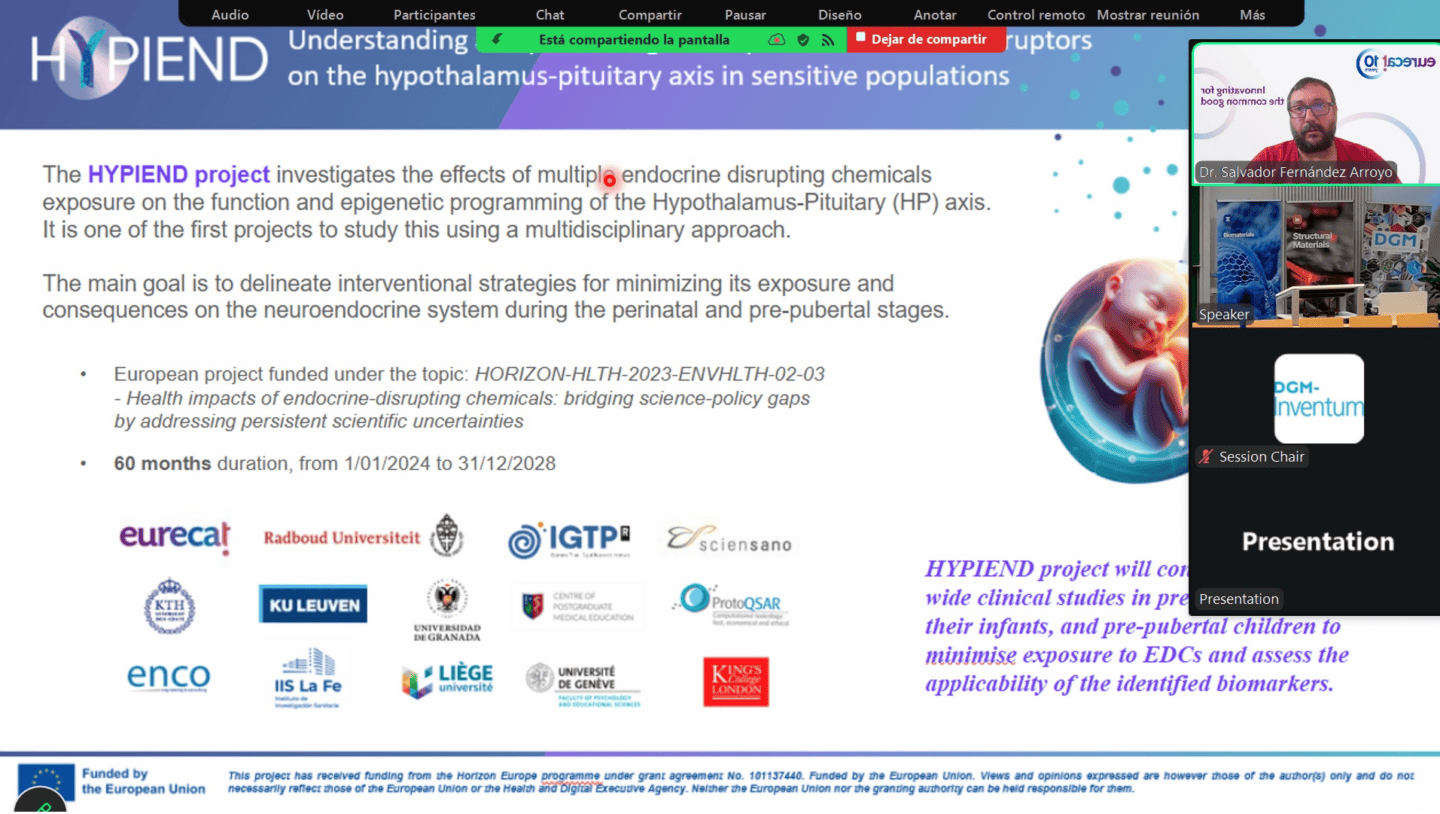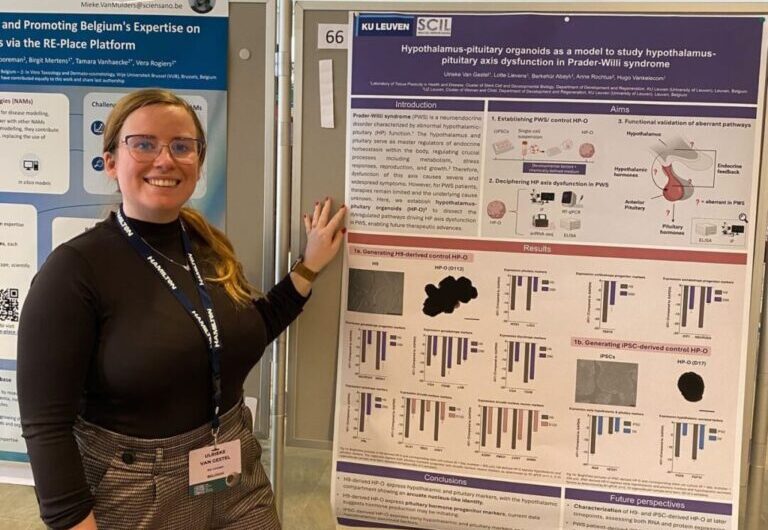
Ulrieke Van Gestel, PhD student at the Cluster of Stem Cell and Developmental Biology at KU Leuven, shared research being carried out within HYPIEND to establish advanced 3D models of the hypothalamus–pituitary system and investigate how endocrine-disrupting chemicals (EDCs) may affect this important hormonal axis. The work has been supervised by Hugo Vankelecom.
The hypothalamus and pituitary gland work together to regulate essential physiological processes through hormone signalling. Within HYPIEND, researchers are developing hypothalamus–pituitary organoids, three-dimensional cell models designed to reproduce key characteristics of these tissues in the laboratory. These models can provide new opportunities to study how exposure to EDCs interferes with endocrine signalling and related biological processes.
Presenting this work at the symposium provided an opportunity to discuss the progress made in establishing these models and exchange knowledge with researchers working on advanced organoid and 3D cell systems.
The “3D Organ Modeling in Health and Disease” Symposium, organised by organoid@KUL at KU Leuven, brought together international scientists working with organoids and other advanced 3D models to better understand human biology and disease. The programme covered models of different organs and applications, including a dedicated session on hypothalamic–pituitary organoids.