







HYPIEND is a research project that investigates the effects of a school and parental policy to reduce exposure to endocrine disruptors in children aged 6 to 8 years.
From 2025 to 2028, HYPIEND will analyse concentrations of endocrine-disrupting chemicals in urine, blood, and faeces to better understand how these substances work and to develop strategies to reduce exposure, particularly among vulnerable groups.
The project is funded by the European Union through the Horizon Europe program.
This study has been approved by the Ethics Committee of IGTP (101137440 -PPC REF.CEI PI-24-217) and ULiège (BHUL-2024-269).
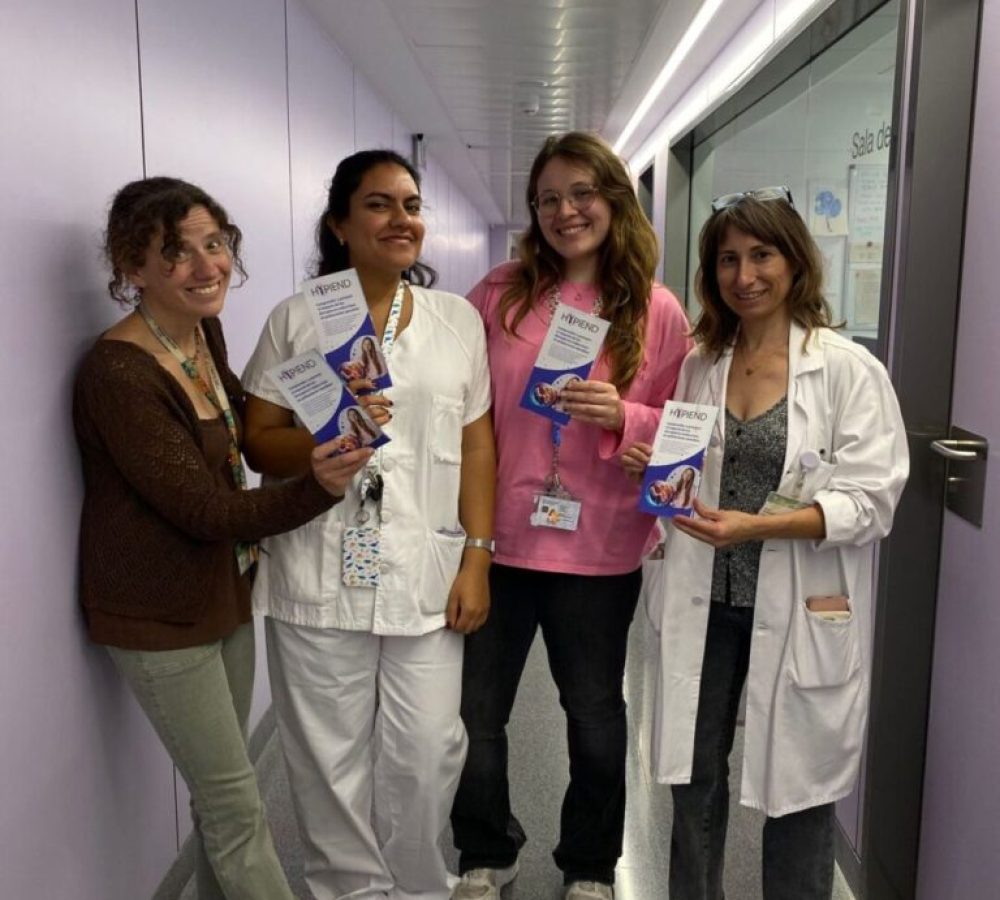
Participants in this study will benefit by learning healthy habits and receiving useful information on how to reduce exposure to environmental endocrine disruptors.
Participants will gain healthy habits and practical guidance to reduce exposure to environmental endocrine disruptors. Families’ and schools’ involvement will help improve knowledge on reducing children’s exposure, and results will be shared with the scientific community and relevant authorities.
Catalunya (Spain) and Wallonia-Brussels Federation (Belgium)
School children between 6 and 8 years old, their parents and teachers.
38 schools: 17 schools in Spain and 21 schools in Belgium
Two and a half years, September 2025 to December 2027
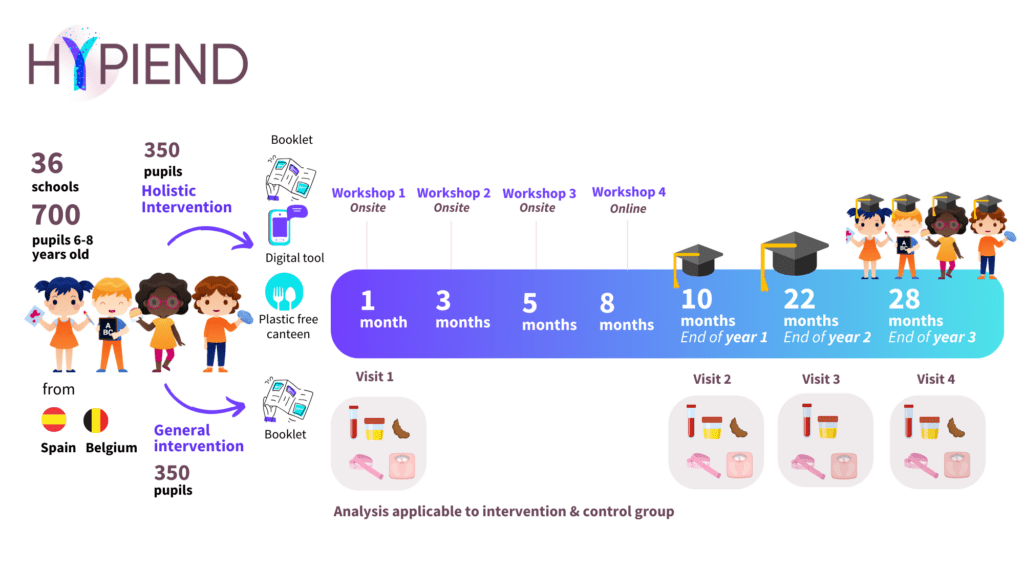
The study evaluates a holistic intervention to reduce exposure to endocrine disruptors in prepubertal children in Belgium and Spain, in comparison with a general intervention.
Several measurements – urinary chemical levels, effects on puberty and anthropometric measurements – will be conducted in several time points.
The intervention includes school educational programs, parent workshops, the use of HYPIEND Digital Tool, designed to encourage a change in habits, and the setting-up of “plastic-free” school canteens; comparing this group of schools with a general intervention group that will receive printed information about endocrine disruptors and how to reduce exposure, as well as workshops on healthy habits.
The principal aim is demonstrating that a holistic educational multi-component intervention implemented in primary schools in two European countries for two and a half school years is effective in reducing the levels of urinary EDC markers of exposure in urine of prepubertal children.
The intervention follows a model based on the Health Action Process Approach (HAPA) constructs to improve intervention and knowledge about these contaminants to the parents. The school intervention will be based on the positive behavior support model.
Study leaders Belgium:
Study leaders Spain:
Contacts with the participating schools were established through the Badalona City Council and Vielha & Mijaran Municipality and Les Municipality, which facilitated the initial institutional approach. Direct contact was also made with the school management teams, and meetings were organized to present the objectives and planned development of the study. Individuals or entities interested in obtaining further information or participating may write directly to the email address of the principal investigators.